
Empowered result – Local action plan for inclusion of Persons with Disabilities in Bosanska Krupa
The City of Bosanska Krupa has adopted and published its Local Action Plan for the inclusion and advancement of the rights of persons with disabilities for 2026–2028. The plan was developed in cooperation with LIR Civilno društvo (LIR CD) as part of the regional EMPOWERED project. Overview The plan sets a clear vision of Bosanska Krupa as a community of equal opportunities and defines strategic goals and time‑bound measures to remove physical, communication and institutional barriers that limit full participation of persons with disabilities. Key goals Planned measures The plan includes concrete interventions such as building adaptations and accessibility upgrades, accessible web and digital mapping tools, professional trainings for teachers and public servants, vocational and career counselling programmes, establishment of a day centre, pilot supported housing, and a local grant scheme to support newly formed organizations of persons with disabilities. Monitoring will be carried out through quarterly oversight meetings and annual evaluations. Regional scope These activities are being implemented across all 15 municipalities participating in the EMPOWERED project, ensuring coordinated local action and exchange of best practices throughout the Western Balkans. Project lead and donor The EMPOWERED project is led by Arbeiter‑Samariter‑Bund Deutschland e.V. (ASB) and implemented locally by partners including LIR CD. The project is funded by the German Federal Ministry for Economic Cooperation and Development (BMZ). For more information and to access the full Local Action Plan, visit: [link]
“Employment is a right” — Mr. Fatmir Sabriu at the Empowered Trilateral Conference, Skopje
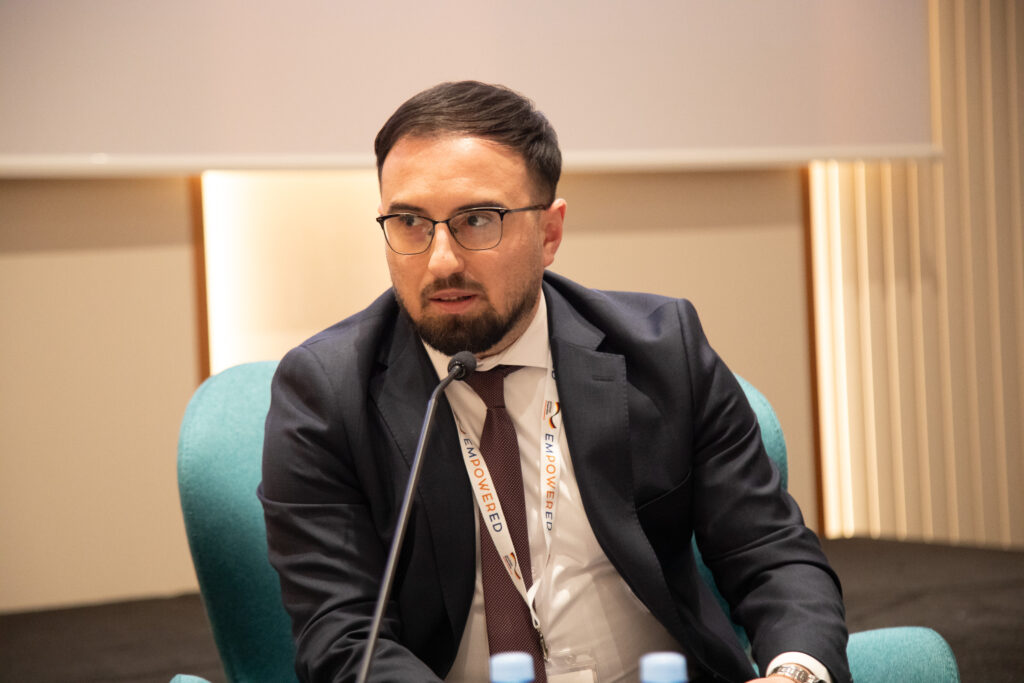
“Employment Is a Right” — Speech by Mr. Fatmir Sabriu at the Empowered Trilateral Conference, Skopje. “Honored members of the diplomatic corps and institutions,Dear colleagues and partners from the region,Honored representatives of civil society organizations and organizations of persons with disabilities, It is my honor to address this Trilateral Conference, which once again confirms that inclusion is not just a national issue, but a shared responsibility and a global human-rights obligation.We live in a time of deep social transformation — demographic changes, labor shortages, accelerated technological development and growing inequalities. In this context, the inclusion of persons with disabilities in the labor market is not only a social need but a strategic necessity for sustainable development.Therefore, the Ministry of Social Policy, Demography and Youth has launched significant systemic reforms, supported by the World Bank. We are not only changing regulations — we are changing the approach to support, work and inclusion.Two key pillars drive this transformation: the new Law on Vocational Rehabilitation and Supported Employment and the new System for the Assessment of Persons with Disabilities. They are the foundation of a modern, fair and functional model of employment policies.But it is important to say clearly — we are not starting from zero. The Law on Employment of Persons with Disabilities has for more than 20 years created real employment opportunities. Through sheltered enterprises and support measures, about 5,000 people are employed today, of whom more than 2,150 are persons with disabilities.Through the Special Fund for Improving Employment and Working Conditions of Persons with Disabilities, non-refundable funds are allocated for employment, workplace adaptations, equipment procurement and employment assistants. In 2025 alone, over 121 million denars were disbursed through this fund, including requests not realized in the previous year. Of these funds, 107 million denars were allocated for the current year — of which over 53 million for employment — which resulted in 80 new jobs for persons with disabilities, and over 54 million for equipment, directly contributing to better working conditions and greater productivity in sheltered enterprises and among employers.These figures show that the system works. But they also tell us something else: that it is time to take a further step — from sheltered to open employment, from segregation to full inclusion.That is why we are building the new Assessment System as a mechanism to unlock potential, not to label limitations. We are moving away from the medical model and toward a human-rights-based approach, in line with the Convention on the Rights of Persons with Disabilities.In the same spirit, we see vocational rehabilitation as a bridge between human potential and economic participation. Our goal is supported employment, employment assistants, adapted workplaces and a real transition to the open labor market. Besides vocational rehabilitation and support, the system also foresees the introduction of quotas for the public and private sectors. But even in this segment, responsibility is not only institutional — it is shared by all of us.Experience in the region and beyond teaches us another important lesson: quotas alone do not create inclusion, funds alone do not create equality, and good intentions alone do not create opportunities. What creates inclusion is a system — a system built on the right to accessibility, appropriate accommodation, quality education, lifelong learning and genuine partnership with the private sector and organizations of persons with disabilities. The private sector should not be seen only as an obligor, but as a key ally in building an inclusive economy, while organizations of persons with disabilities are an essential partner in designing, implementing and monitoring policies themselves. No country in the region can achieve this transformation alone. Alongside cooperation with organizations of persons with disabilities, civil society organizations and private entities, regional cooperation is also a key instrument. Through joint learning, exchange of experience and joint action in line with international standards, we can together contribute to establishing systems that are sustainable, coherent and future-oriented.Allow me to finish with one thought.Disability policies are often seen as programs, measures and laws. But at their core, they are a question of how societies define human dignity.Assessment is not a verdict. Vocational rehabilitation is not a privilege; it is an important tool of the state for persons with and without disabilities.Employment is not a service. It is a right. And the role of the state is crucial in overcoming barriers and building an environment with real opportunities for full participation for all of us, with or without disabilities.Thank you.” Speaker: Mr. Fatmir Sabriu, Secretary of State, Ministry of Social Policy, Demography and Youth, RN Macedonia
Tender Reference No.: BOS2404-LIRCD-SER-T05
On 11th of February 2026, organization LIR Civil Society hereby announces the launch of a tender for theProvision of comprehensive expert services for vocational education and training (VET), work integration,career counselling and psycho-social support for persons with disabilities (PwDs), reference numberBOS2404-LIRCD-SER-T05 within the project “EMPOWERED – Inclusion of persons with disabilities (PWDs),regional cooperation and development in the Western Balkans”, funded by the Federal Ministry forEconomic Cooperation and Development, Germany (BMZ). All interested bidders are invited to submit their request for tender documentation on company’s letterhead,to the e-mail addresses: zoran.basic@lircd.org; maja.katic@lircd.org and ivana.bojinovic@lircd.org The deadline for submitting offers in accordance with the tender documentation is 11. 03. 2026, by 12:00.
Tender ref.no.: BOS2404_IDC/SUPP T 02
TENDER FOR THE SUPPLY OF EQUIPMENT FOR SUPPORT TO LOCAL COMMUNITY WITHIN LOCAL INCLUSION PROJECTS FOR PwDs/ CITY OF LESKOVAC We are informing you that on 09.02.2026. the organization Initiative for Development and Cooperation is opening the procurement for the supply of equipment for support to local community within local inclusion projects for PwDs/ city of Leskovac, reference number BOS2404_IDC/SUPP T 02, within the project “EMPOWERED – INCLUSION OF PERSONS WITH DISABILITIES (PWDS), REGIONAL COOPERATION AND DEVELOPMENT IN THE WESTERN BALKANS”, funded by the Federal Ministry for Economic Co-operation and Development, Germany (BMZ). All interested bidders may send a request on company’s memo to request the tender documentation to the e-mail procurement@idcserbia.org. The deadline for submitting offers is March 11th, 2026. at 12:00 hours.
Tender Reference No.: BOS2404-LIRCD-SER-T06
On 29th of January 2026, organization LIR Civil Society hereby announces the launch of a tender for the Provision of services for logistic support of the Study visit in Croatia and Slovenia, reference number BOS2404-LIRCD-SER-T06 within the project “EMPOWERED – Inclusion of persons with disabilities (PWDs), regional cooperation and development in the Western Balkans”, funded by the Federal Ministry for Economic Cooperation and Development, Germany (BMZ). All interested bidders are invited to submit their request for tender documentation on company’s letterhead, to the e-mail addresses: zoran.basic@lircd.org; maja.katic@lircd.org and ivana.bojinovic@lircd.org The deadline for submitting offers in accordance with the tender documentation is 02. 03. 2026, by 12:00.
Tender ref.no.: BOS2404_IDC/WORKS T 01
Tender ref.no.: BOS2404_IDC/WORKS T 01 TENDER FOR THE CONSTRUCTION AND INSTALLATION OF PREFABRICATED HOUSE FOR PERSONS WITH DISABILITIES IN CITY OF DIMITROVGRAD We are informing you that on 27.01.2026 the organization Initiative for Development and Cooperation is opening the procurement for the construction and installation of prefabricated house for persons with disabilities in city of Dimitrovgrad, reference number BOS2404_IDC/WORKS T 01, within the project “EMPOWERED – INCLUSION OF PERSONS WITH DISABILITIES (PWDS), REGIONAL COOPERATION AND DEVELOPMENT IN THE WESTERN BALKANS”, funded by the Federal Ministry for Economic Co-operation and Development, Germany (BMZ). All interested bidders may send a request on company’s memo to request the tender documentation to the e-mail procurement@idcserbia.org. The deadline for submitting offers is February 26st, 2026. at 12:00 hours.
Three-day project-writing Empowered training in Travnik
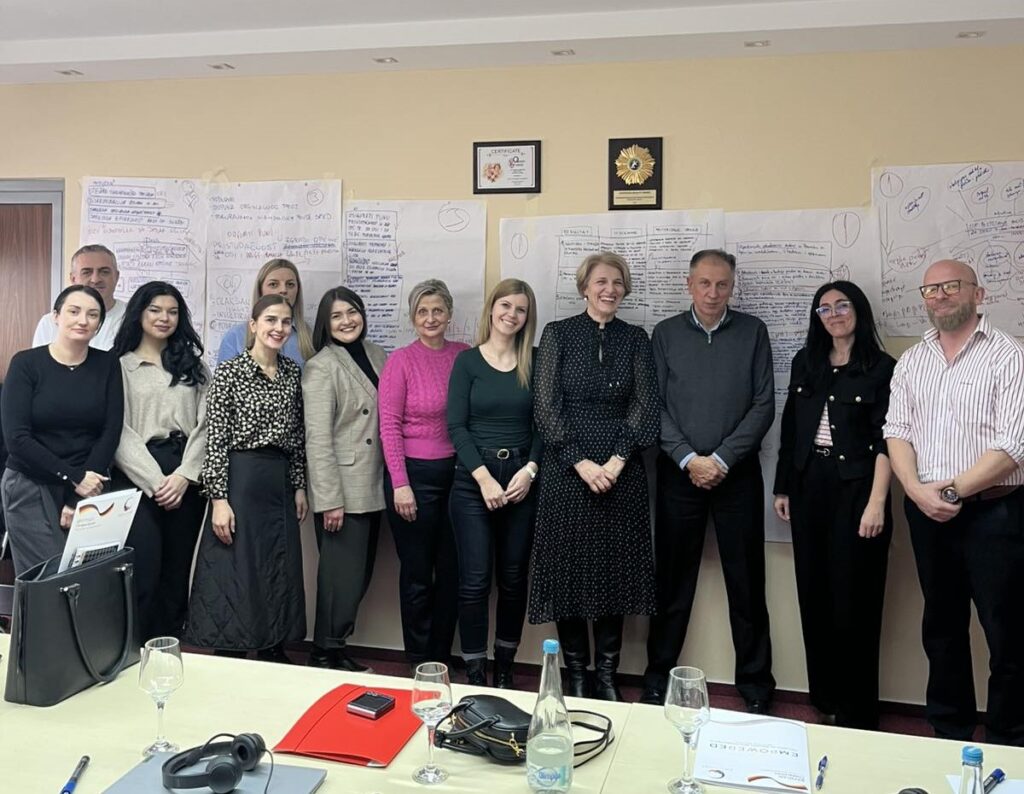
The three-day Empowered project-writing training was successfully held in Travnik, co-organized by LIR CD and the Municipality of Travnik. The training was led by Prof. Dr. Adis Arapović and brought together activists and representatives of associations from the region. The importance of empowering local associations Empowering associations at the local level means strengthening their ability to identify community needs independently, design sustainable solutions, and secure funding for their implementation. When local organizations gain project-writing skills, they: Regional reach of the programme Empowered trainings are conducted in all 15 municipalities of the Western Balkans included in the project, building a wider network of over 60 organisations. This approach enables the exchange of good practices, interregional cooperation, and joint pilot projects that go beyond local borders — all aimed at greater inclusion of persons with disabilities and sustainable service development across the region. The results of the Travnik training — three project concepts developed in under 10 hours — confirm that targeted trainings quickly raise capacities. We continue with the same intensity in other municipalities to ensure that local organisations have the knowledge, tools, and partnerships needed for lasting change.
EMPOWERED SKOPJE: Trilateral conference on the inclusion of persons with disabilities in the Western Balkans
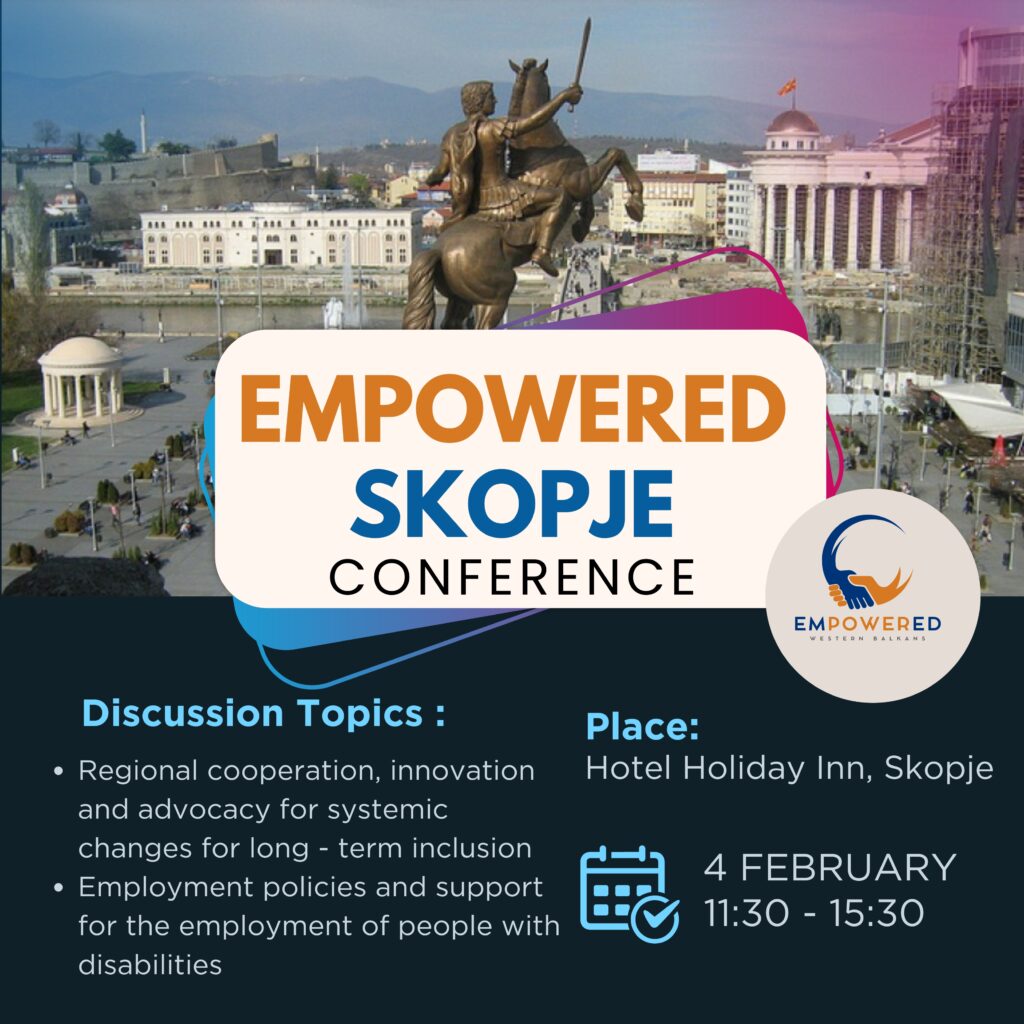
CDI Macedonia, in partnership with Preda Plus and ADRF and with support from partner organisations within the regional EMPOWERED initiative, is organising a trilateral conference dedicated to advancing the inclusion of persons with disabilities and strengthening regional cooperation for sustainable development in the Western Balkans. The event will take place on February 4, 2026, at the Holiday Inn Skopje and continues the series of knowledge‑sharing activities initiated at the regional conference in May 2025 and the trilateral meeting in Sarajevo at the end of 2025. The conference aims to bring together decision‑makers, ministry representatives, organisations of persons with disabilities, experts and private‑sector stakeholders to discuss two thematic sessions — regional cooperation, innovation and advocacy for systemic change, and employment policies and support for the employment of persons with disabilities — and to identify concrete steps for policy harmonisation, exchange of good practices and development of innovative solutions for an inclusive labour market. Special focus will be placed on empowering the participation of persons with disabilities in policymaking, strengthening regional advocacy networks and improving support mechanisms for long‑term inclusion. Organised by CDI Macedonia in cooperation with Preda Plus Foundation and ADRF – Albanian Disability Rights Foundation.
Tender Reference No.: BOS2404-LIRCD-WOR-T01
On 16th of January 2026, organization LIR Civil Society hereby announces the launch of a tender for theprovision of services for Installation of an elevator in the city administration building Bosanska Krupa,reference number BOS2404-LIRCD-WOR-T01 within the project “EMPOWERED – Inclusion of persons withdisabilities (PWDs), regional cooperation and development in the Western Balkans”, funded by the FederalMinistry for Economic Cooperation and Development, Germany (BMZ). All interested bidders are invited to submit their request for tender documentation on company’s letterhead,to the e-mail addresses: zoran.basic@lircd.org; maja.katic@lircd.org and ivana.bojinovic@lircd.orgThe deadline for submitting offers in accordance with the tender documentation is 16. 02. 2026, by 12:00.
𝐃𝐢𝐬𝐚𝐛𝐢𝐥𝐢𝐭𝐲 𝐚𝐰𝐚𝐫𝐞𝐧𝐞𝐬𝐬 𝐦𝐞𝐚𝐧𝐬 𝐬𝐭𝐫𝐮𝐜𝐭𝐮𝐫𝐚𝐥 𝐜𝐡𝐚𝐧𝐠𝐞
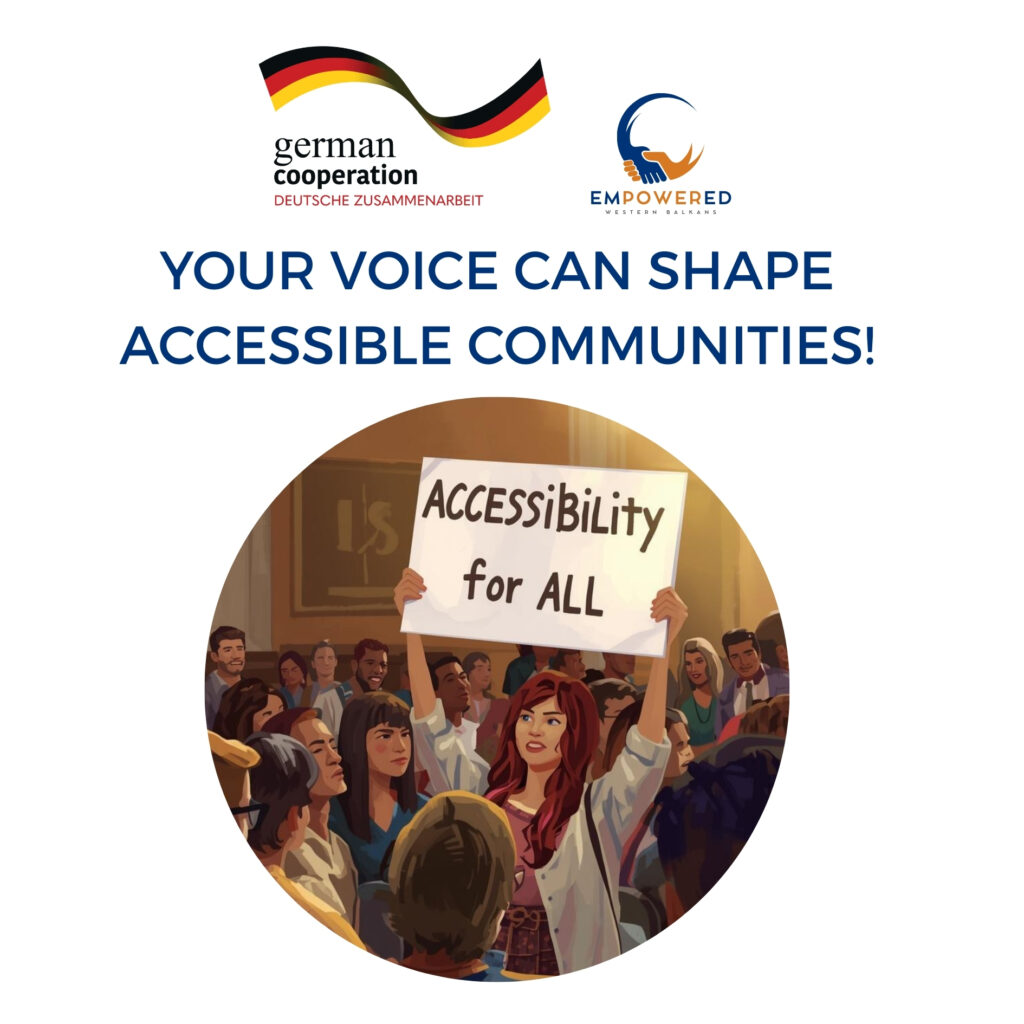
Disability awareness is not a campaign. It is not a gesture. It is a responsibility. True inclusion requires action at every level — in policies, institutions, workplaces, and communities. This is how we turn rights into reality: Inclusive education Accessibility is not optional. Schools must be equipped, adapted, and resourced so every student can learn on equal terms. Lived experience matters — voices of persons with disabilities belong in classrooms, not on the margins. Accessible workplaces Employment is a right. Inclusive hiring, reasonable accommodation, and accessible work environments are the minimum standard — not a favor. Diversity strengthens teams when systems are designed to include everyone. Community & policy action Change happens where decisions are made. We engage with local authorities and institutions to demand accessible public spaces, inclusive planning, and accountability — because participation without access is exclusion. Equitable healthcare Healthcare systems must work for everyone. Accessibility, clear communication, and continuous feedback from persons with disabilities are essential to dignity, safety, and quality care. Responsible media representation Nothing about us without us. Authentic, respectful representation challenges stereotypes and shifts narratives — from pity to power, from invisibility to visibility. Inclusion does not happen by chance. It happens when systems change, voices are heard, and commitments turn into action. Stand for rights. Amplify lived experience. Demand inclusion.