Tender Reference No.: BOS2404-PP-S06
Invitation to Tender: Provision of comprehensive services for Vocational Education and Training (VET) and Work Integration Program (WIP) for persons with disabilities (PwDs) PREDA Plus hereby announces the launch of the tender for a “Provision of comprehensive services for Vocational Education and Training (VET) and Work Integration Program (WIP) for persons with disabilities (PwDs)” under reference number BOS2404-PP-S06. This tender is issued as part of the project “EMPOWERED – Inclusion of Persons with Disabilities (PWDs), Regional Cooperation, and Development in the Western Balkans”, funded by the Federal Ministry for Economic Cooperation and Development, Germany (BMZ). Interested bidders are invited to submit their requests for tender documentation on official company letterhead between 19 August – 04 September, 2026, by sending an email to: info-kosovo@predaplus.eu The deadline for submission of bids is September 18, 2026, at 15:00.
Tender Reference No.: BOS2404-PP-S07
Invitation to Tender: Istog without Barriers – Installing Tactile Paving Tiles for People with Visual Impairments PREDA Plus hereby announces the launch of the tender for a “Istog Without Barriers – Installing Tactile Paving Tiles for People with Visual Impairments”, under reference number BOS2404-PP-S07. This tender is issued as part of the project “EMPOWERED – Inclusion of Persons with Disabilities (PWDs), Regional Cooperation, and Development in the Western Balkans”, funded by the Federal Ministry for Economic Cooperation and Development, Germany (BMZ). Interested bidders are invited to submit their requests for tender documentation on official company letterhead between 19 August – 07 September, 2026, by sending an email to: info-kosovo@predaplus.eu. The deadline for submission of bids is September 21, 2026, at 15:00.
Tender ref.no.: BOS2404_IDC/SER T 08
TENDER FOR PROVISION OF MID-TERM PROJECT RESULTS EVALUATION SERVICES We are informing you that on August 17, 2026 the organization Initiative for Development and Cooperation is opening the procurement for provision of Mid-Term Project Results Evaluation services, reference number BOS2404_IDC/SER T 08, within the project “EMPOWERED – INCLUSION OF PERSONS WITH DISABILITIES (PWDS), REGIONAL COOPERATION AND DEVELOPMENT IN THE WESTERN BALKANS”, funded by the Federal Ministry for Economic Co-operation and Development, Germany (BMZ). All interested bidders may send a request on company’s memo to request the tender documentation to the e-mail procurement@idcserbia.org. The deadline for submitting offers is September 16, 2026. at 12:00 hours.
Tender Reference No.: BOS2404-LIRCD-WOR-T03
On the 13th of August, organization LIR Civil Society hereby announces the launch of a tender for theReconstruction of the premises of the association for children and persons with disabilities “Sreća za sve” –Travnik, reference number BOS2404-LIRCD-WOR-T03 within the project “EMPOWERED – Inclusion ofpersons with disabilities (PWDs), regional cooperation and development in the Western Balkans”, fundedby the Federal Ministry for Economic Cooperation and Development, Germany (BMZ).All interested bidders are invited to submit their request for tender documentation on company’s letterhead,to the e-mail addresses: zoran.basic@lircd.org; maja.katic@lircd.org and ivana.bojinovic@lircd.orgThe deadline for submitting offers in accordance with the tender documentation is 14. 09. 2026, by 12:00.
Certificates awarded to eight persons with disabilities in Travnik through the Empowered project
Eight persons with disabilities in Travnik have successfully completed vocational training programs within the Empowered project and were awarded certificates at a ceremony held to mark their achievement. The event was marked by smiles, pride and a strong sense of accomplishment among the participants, who gained new knowledge, practical skills and competencies through various training programs. The training included programs for florists and massage therapists, as well as computer literacy and other activities adapted to the participants’ needs and interests. The knowledge and skills they acquired represent an important step towards greater independence, improved employment opportunities and more active participation in community life. With the awarding of these eight certificates, the total number of persons with disabilities who have successfully completed training and obtained certificates through the program has increased to 20. “These numbers represent more than certificates. They represent people, their effort, time, learning, persistence and desire for new opportunities,” representatives of the Municipality of Travnik stated. Projects such as “Empowered” are particularly important because they contribute to the development of knowledge and skills, strengthen self-confidence and create better opportunities for persons with disabilities to participate in the labour market and in the social life of their local communities. In Travnik, these activities were implemented by LIR Civil Society, with the support of the Municipality of Travnik. Through vocational training, skills development and direct support to participants, the activities contributed to empowering persons with disabilities and strengthening their inclusion in the social and economic life of the community.
Tender ref.no.: BOS2404_IDC/SER T 07
TENDER FOR PROVISION OF SERVICES FOR DEVELOPMENT OF THE GUIDE ON PPC PARTNERSHIPS We are informing you that on August 6, 2026 the organization Initiative for Development and Cooperation is opening the procurement for provision of services for development of the guide on PPC Partnershps, reference number BOS2404_IDC/SER T 07, within the project “EMPOWERED – INCLUSION OF PERSONS WITH DISABILITIES (PWDS), REGIONAL COOPERATION AND DEVELOPMENT IN THE WESTERN BALKANS”, funded by the Federal Ministry for Economic Co-operation and Development, Germany (BMZ). All interested bidders may send a request on company’s memo to request the tender documentation to the e-mail procurement@idcserbia.org. The deadline for submitting offers is September 7, 2026. at 12:00 hours.
Inclusion begins with opportunities: Building stronger and more inclusive communities
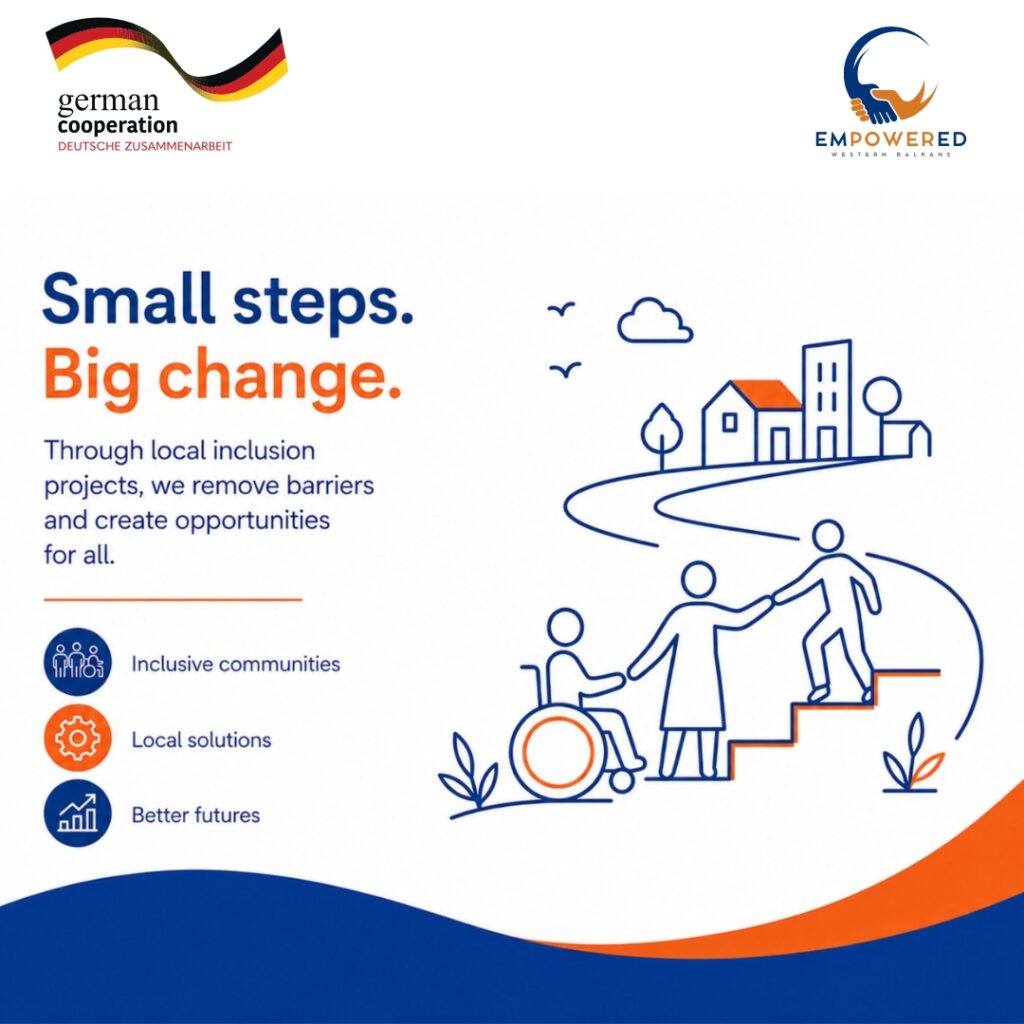
Inclusion is not created through a single action. It is built step by step – through new opportunities, skills, partnerships and the continuous removal of barriers that prevent persons with disabilities from participating equally in society. Through the EMPOWERED – Inclusion of Persons with Disabilities, Regional Cooperation and Development in the Western Balkans project, partners across the region are working together to create communities in which persons with disabilities have greater opportunities to participate, work, develop their potential and contribute to society. A key focus of the project is strengthening opportunities at the local level. By bringing together persons with disabilities, local authorities, civil society organizations, institutions, employers and other relevant stakeholders, EMPOWERED supports the development of solutions that respond to the real needs of local communities. Particular attention is given to improving access to employment and economic opportunities. Through different forms of support, capacity building, vocational development and cooperation with local stakeholders, the project aims to help create an environment in which persons with disabilities can develop their skills and participate more actively in the labour market. At the same time, meaningful inclusion requires more than access to services and employment. It also means ensuring that persons with disabilities are actively involved in decisions that affect their lives. Their experiences, perspectives and priorities are essential for developing policies and local initiatives that can bring sustainable and lasting change. Across the Western Balkans, EMPOWERED partners continue to strengthen cooperation between communities, institutions and organizations, encouraging an approach in which inclusion becomes a shared responsibility. Real change does not happen overnight. It is created through everyday actions, long-term commitment and partnerships that turn ideas into concrete opportunities. Every new skill learned, every partnership created and every barrier removed brings us one step closer to communities where everyone has the opportunity to contribute and succeed. Through EMPOWERED, we continue working towards a Western Balkans where inclusion is not only an aspiration, but part of everyday life.
Tender ref. No.: BOS2404_AC/SUPP T 01
We hereby inform you that on 31st July 2026, ALFA Center is launching a tender for Supply of rental vehicles, reference number NO. BOS2404_AC/SUPP T 01, within the framework of the project “EMPOWERED – Inclusion of People with Disabilities, Regional Cooperation and Development in the Western Balkans”, funded by the Federal Ministry for Economic Cooperation and Development of the Federal Republic of Germany (BMZ). All interested bidders are invited to submit a request to obtain the tender documentation to the following e-mail address: alfacentar@t-com.me. The deadline for submission of bids, in accordance with the tender documentation, is 31 August 2026 at 12:00 (noon).
Tender ref.no.: BOS2404_CDI/SUPP T 01SUPPLY OF RENTAL VEHICLE
We inform you about cancellation of the tender procedure for the supply of a rental vehicle, withinthe project “EMPOWERED – INCLUSION OF PERSONS WITH DISABILITIES (PWDS), REGIONALCOOPERATION AND DEVELOPMENT IN THE WESTERN BALKANS”, Ref. No. BOS2404_CDI/SUPP T 01,due to an insufficient number of offers.We remain at your disposal for any additional information.
Partnerships that drive inclusion across the Western Balkans
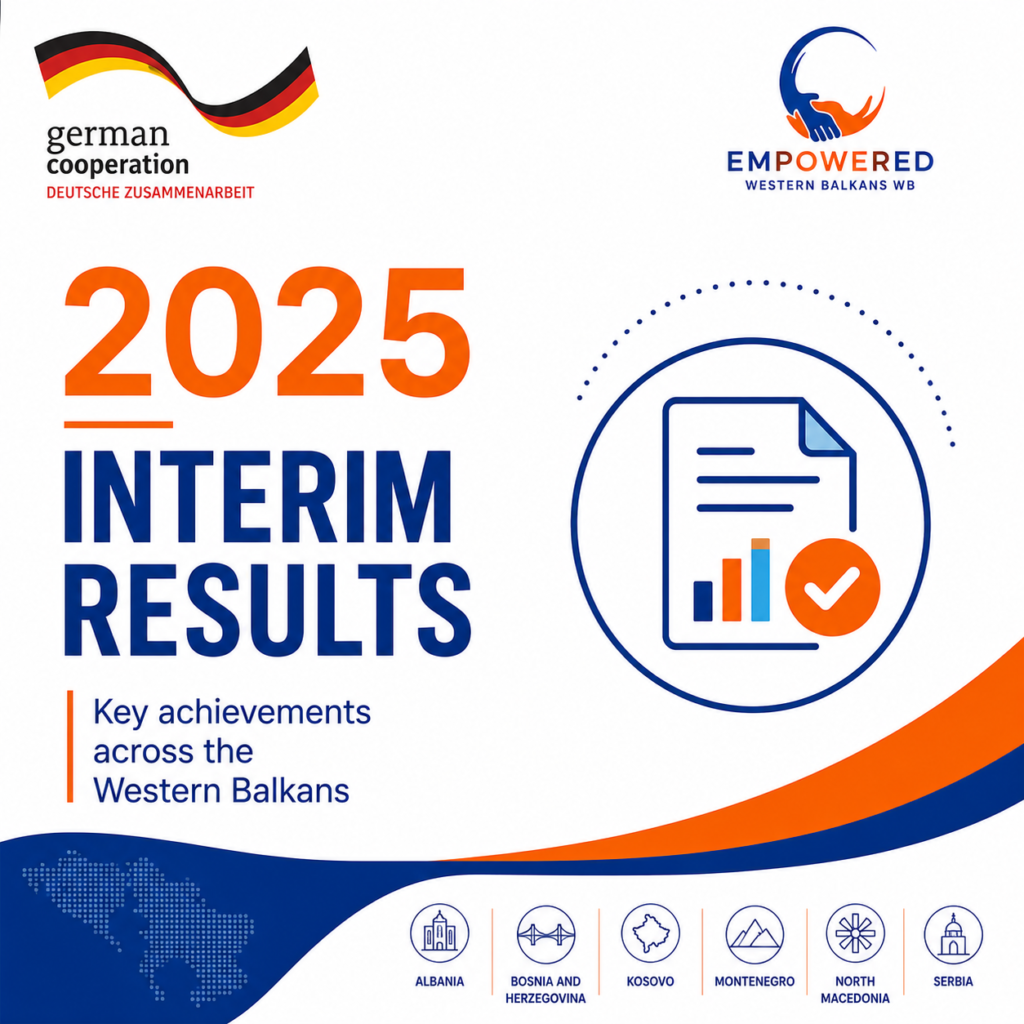
Inclusion is not achieved through isolated efforts. It is built through strong partnerships, local ownership and a shared commitment to creating communities where persons with disabilities can participate equally in every aspect of life.Across the Western Balkans, the EMPOWERED project continues to bring together municipalities, civil society organizations, institutions and local communities to strengthen disability inclusion through practical, locally driven solutions. By encouraging cooperation, supporting local initiatives and promoting dialogue, the project is helping create more accessible, inclusive and sustainable communities. Over the past period, significant progress has been made across all six project countries. Local Working Groups have been established and actively engaged in identifying priorities and developing Local Inclusion Plans tailored to the needs of their communities. Through these collaborative processes, municipalities and organizations are working together to implement concrete actions that improve the daily lives of persons with disabilities.The project has also supported numerous local initiatives, strengthened the capacities of local stakeholders through training and mentoring, and encouraged the exchange of knowledge and good practices across the region. Career counselling, psychosocial support activities, public consultations and community-based interventions continue to empower persons with disabilities while promoting their active participation in social and economic life.These achievements demonstrate the value of regional cooperation and underline the importance of investing in partnerships that place inclusion at the center of local development.As the project moves forward, EMPOWERED will continue to support municipalities, organizations and communities in developing innovative, sustainable and inclusive solutions that ensure no one is left behind.Together, we are building stronger partnerships, more inclusive communities and greater opportunities for persons with disabilities throughout the Western Balkans. The EMPOWERED – Inclusion of Persons with Disabilities, Regional Cooperation and Development in the Western Balkans project is led by Arbeiter-Samariter-Bund SEE and implemented in partnership with IDC Serbia, LIR CD, PREDA Plus Foundation, Alfa Center, Community Development Institute (CDI) and Albanian Disability Rights Foundation (ADRF). The project is funded by the German Federal Ministry for Economic Cooperation and Development (BMZ).